By Agnieszka Gautier
Ron Webb stood on the riverbank and noticed something troubling. On this early spring morning, to the untrained eye, the river looked frozen—solid enough to travel by snowmobile—but it was not. Webb, a community observer with the Nunatsiavut Sea Ice Observers Program (NSIOP), sent his observation in a report to Emma Harrison, one of the program’s founders, stating that there was no core ice in the river. Harrison, who recently completed a PhD in Oceanography, worked closely with Indigenous observers from Nunatsiavut, Canada, to develop observing and data collection protocols. When Harrison read Webb’s observation, she knew she was missing something, so she called him. The conversation lasted for several hours. “A lot is going unsaid in these observational reports,” she said. “A lot is in context and about an environment that I’m unfamiliar with.”
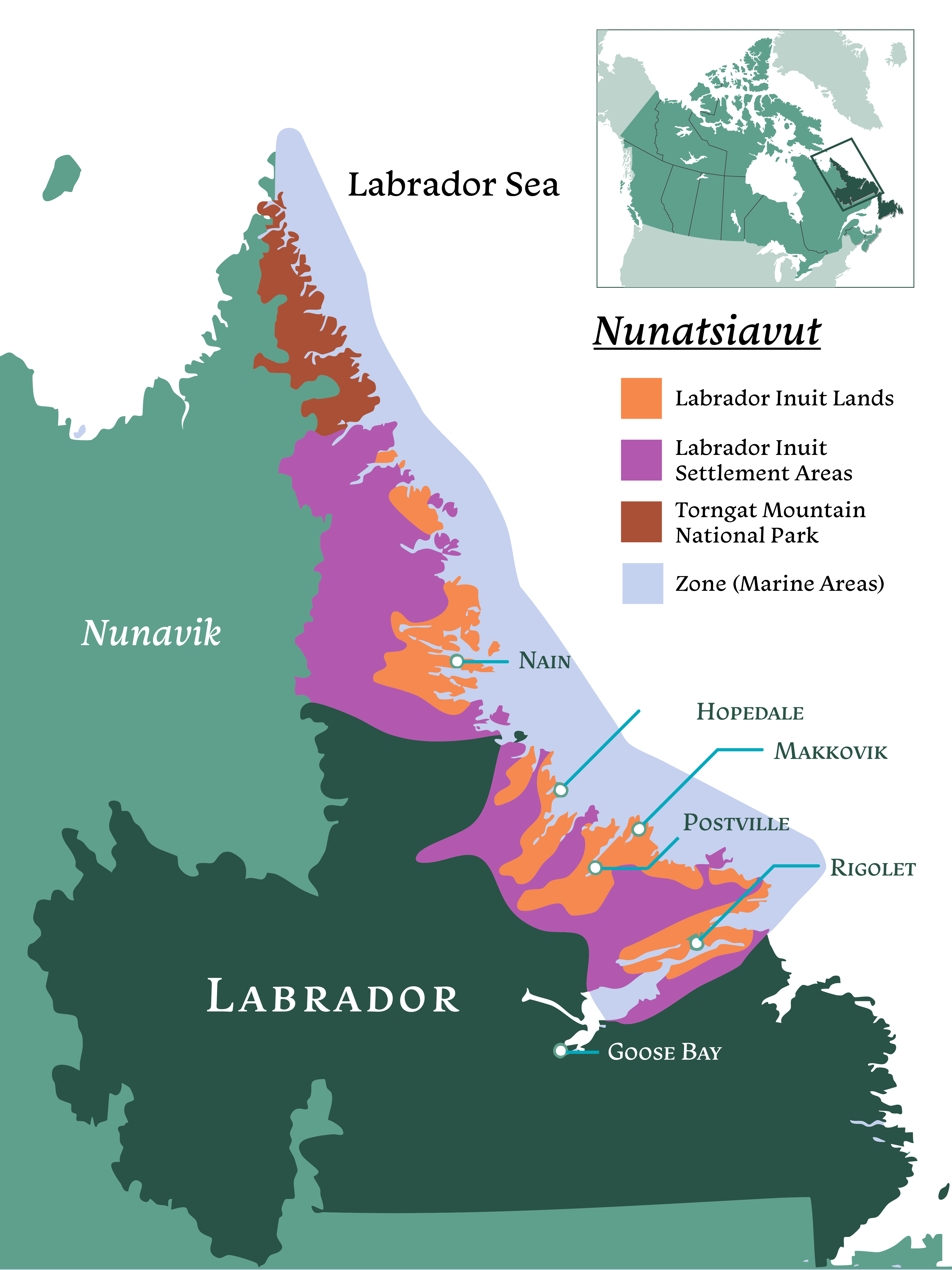
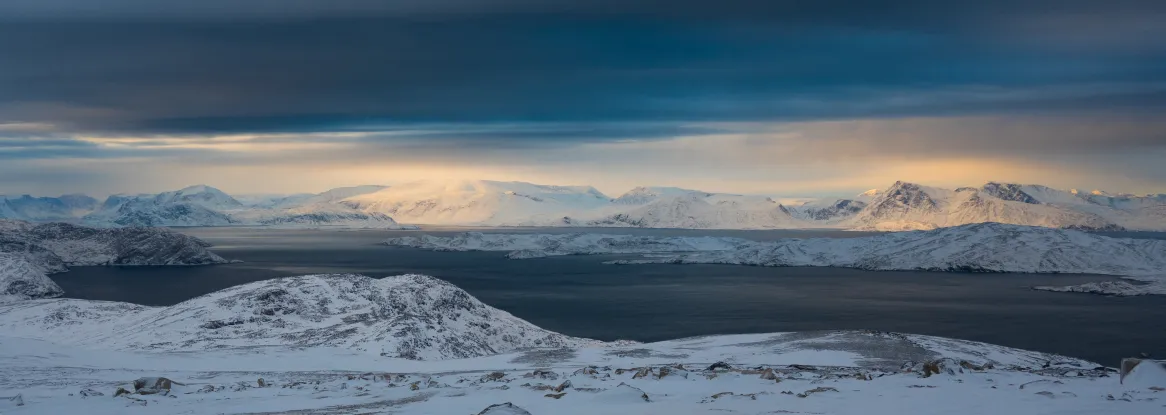
Nunatsiavut, meaning “our beautiful land” in the Inuttitut language, is home to a self-governing Inuit population of 2,500, living along the rugged northern coast of Labrador. Here, the subarctic transitions into the Arctic where fjords cut deep inland and small islands confetti the coastline. Traveling over the ice has been a means of connecting Inuit communities for millennia. No one understands this complex environment better than Inuit. So, the founders of NSIOP wished to create an Inuit data set to stand alongside academic scientific data sets, rendering their observations harder to ignore by other researchers and government decision makers.
Webb is one of six Inuit sea ice experts who report on sea ice conditions and represent four of the major coastal towns. The observers include Derrick Pottle from Rigolet, Maurice Jacque from Postville, Todd Broomfield from Makkovik, Reuben and Ross Flowers from Hopedale, and Webb from Nain—the administrative capital and largest community of the region. Each community has endorsed these observers to represent their region, recognizing the deep knowledge they have gained through years of experience interacting with the land as hunters and fishers. But their ways of seeing do not always align with academic terminology.
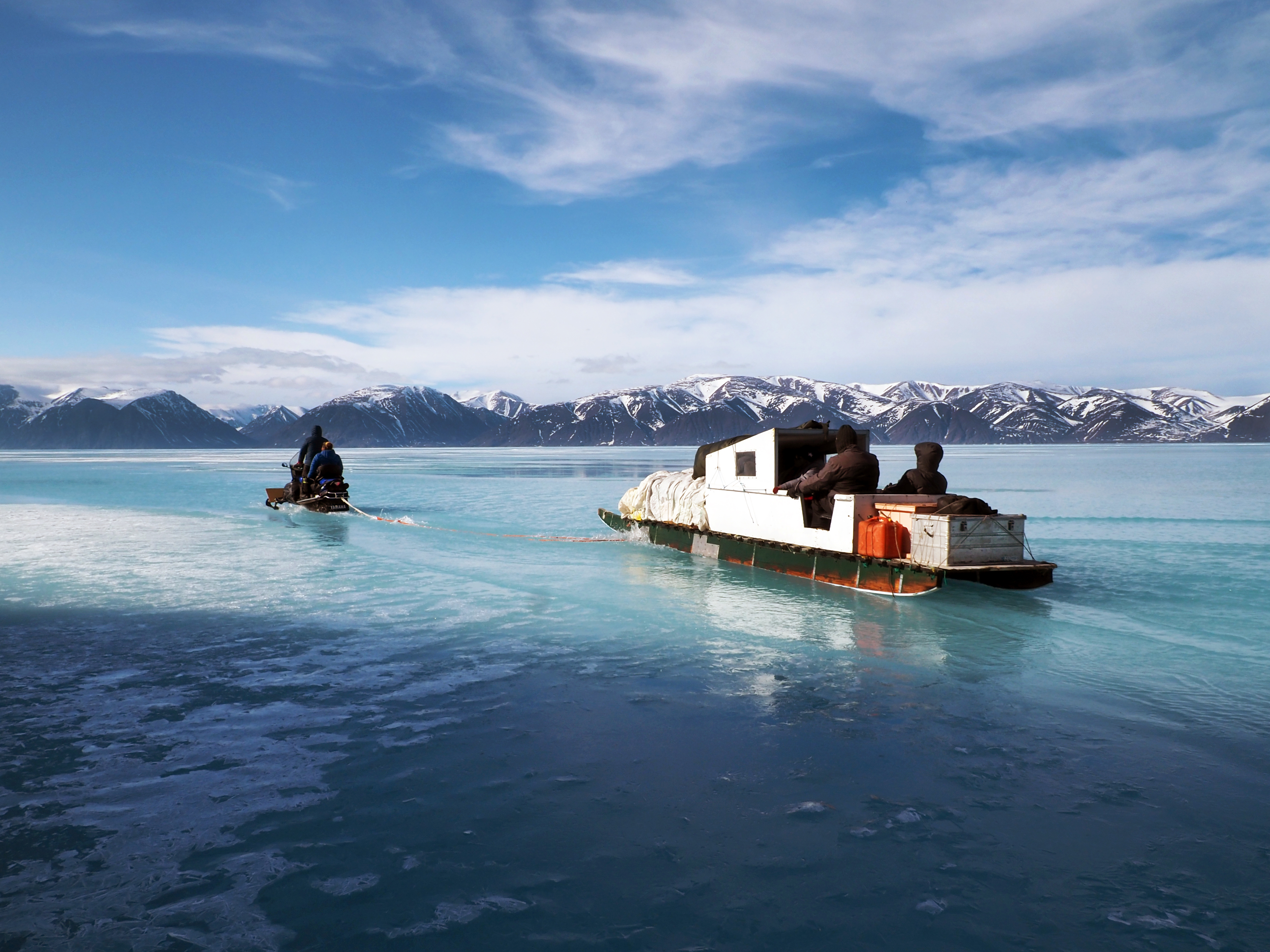
Harrison had never heard of the term core ice used in reference to frozen rivers. “Ron was really patient with me and my ignorance,” she said. If there is core ice on the riverbanks, only a keen eye can detect it, as it is hidden beneath the surface. Webb explained that core ice—the thick, reliable river ice—forms when river water is forced to the frozen surface and freezing, thus thickening the surface with each new layer of freshwater. It is essential for safe snowmobile travel in late spring and summer. Harrison added, “Ron really taught me to read more than what’s written down, to understand instead of just viewing it as data,” she said. Harrison and the NSIOP team wanted to capture these rich observations in the voice of the observers and include them in an online tool to record events and environmental change, but they did not know how best to represent the observations in a database.
NSIOP is just one of many projects collaborating with the Exchange for Local Observations and Knowledge of the Arctic (ELOKA), a program at the National Snow and Ice Data Center (NSIDC). After Harrison helped conceptualize the observational program, the team building the program needed to figure out the logistics for gathering the observations and creating an accessible, online database. So, Harrison reached out to ELOKA for ideas. ELOKA had built custom observational platforms, such as the Alaska Arctic Observatory and Knowledge Hub (AAOKH) database, and NSIOP trusted ELOKA could create an organic platform specific to their needs that mimicked how the NSIOP observers would communicate their observations within the community. ELOKA was ready for the challenge.
How to build an observational network
Before ELOKA could help shape the observational database, the newly-formed project needed to recruit sea ice experts from the Nunatsiavut communities. Eric Oliver, the lead principal investigator of the program, is Inuit with roots in Rigolet and grew up just outside of Nunatsiavut, in Labrador. “I grew up seeing how people observe in Inuit communities,” said Oliver, “and how that was distinct and complementary to the way science does things. So, the program grew out of what I knew—how people observe—and asking if those observations can be documented.” The idea was sown. Oliver wanted these contemporary Inuit observations to be viewed alongside institutional scientific observations and documentation, with researchers and governments recognizing the legitimacy of Inuit Knowledge. But many questions remained: What format would be used to document and collect observations? Who was going to be observing? Who could access the observations? Would Inuit communities find these useful?
Harrison, who is also a founding member of the Center for Interdisciplinary Environmental Justice, stepped up to find the observers, while Oliver worked on securing funding and figuring out support for the program. In late 2021, Harrison arrived in Nain. As the largest community, she thought it might be the easiest to secure observers for the program. It took months, however, to find individuals willing and interested to represent their communities. Harrison explained, “Inuit knowledge is collectivized in many ways. Expertise is vetted communally. People know so much more than what they say, but they’re very clear as to where their direct experience stops.” Harrison figured out early on that to develop relationships she needed to work with well-respected individuals in the communities, and that identifying these individuals was going to take some effort.
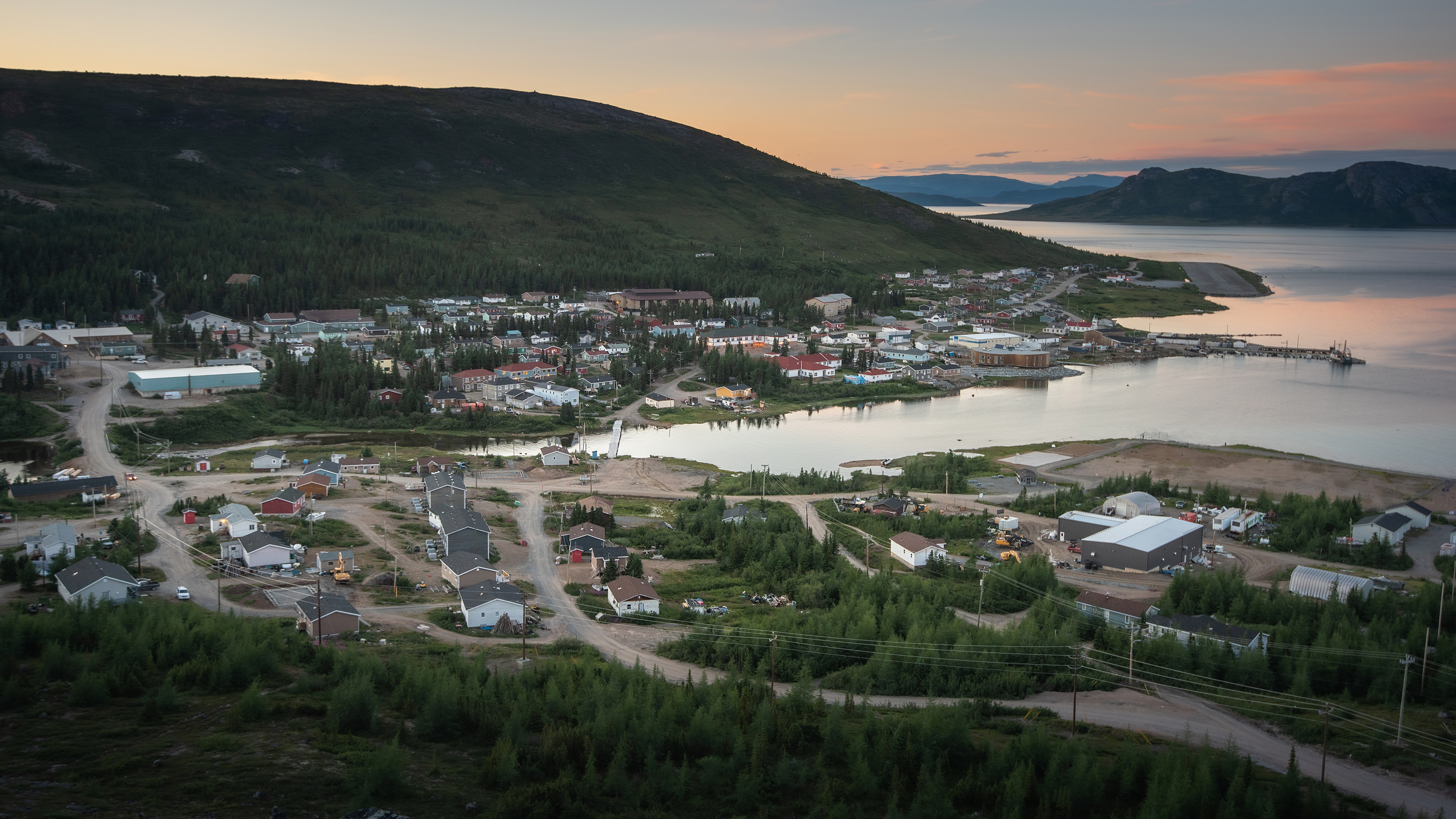
First, Harrison reached out to different community leadership representatives for contacts. She checked the list of hunters’ names who donated game to Nain’s community freezer program. She tracked people through Facebook and the phone book (they still have that). She went on the community radio twice a month and even stopped folks in the street to introduce herself, handing them a baked good out of her pocket to thank them for their time. Eventually, the same names kept emerging. Two individuals in Nain agreed to engage with the project as observers, receiving small monetary compensation for their efforts. After Nain, it was much easier to find others in smaller towns. “I just showed up, talked to leadership, and they handed me a list,” she said. “It never had more than two people on it. It was very clear who they wanted to represent them.” Each observer and their knowledge are highly regarded within their community. The following year, six observers were confirmed, and the program developers settled on the process of collecting observations, returning to the idea that knowledge sharing should not come down to a series of checkboxes. Now, what remained was figuring out how the database structure could mirror existing observational communication within the community.
Observing differences
The database design came down to two principles. One, the observations needed to feel raw, authentic, and conversational. Two, the data needed a focal point. The authentic component depended on how the observations were going to be uploaded. Rather than checking boxes, the interface captures the observation as it was reported, allowing more free-form, narrative-based documentation. Details include the observer, location, and time with a media option, where observers can add photos, videos, or hand-drawn and annotated maps. So, the interface is intentionally simple. “It’s recording the observations that people would make naturally in their community and how it is shared when they talk to their family or friends,” Oliver said. Not having specific guidelines on what to observe and report, NSIOP intentionally asks for open-ended observations, giving its observers the freedom to record what is relevant and in their own voice. The database also maintains the original observation while posting an edited version. “Each observer’s observations can look very different from each other,” Oliver said. “And they end up referencing a lot, even cultural things that are important to them. One observer, Ross Flowers, was cutting the seal skin in a very specific way, spiral cuts, to get long pieces of fur to make rope for the dog team.” The resulting observations tend to have multifaceted components, a holistic vision of the landscape, cultural practices, and changing climate.
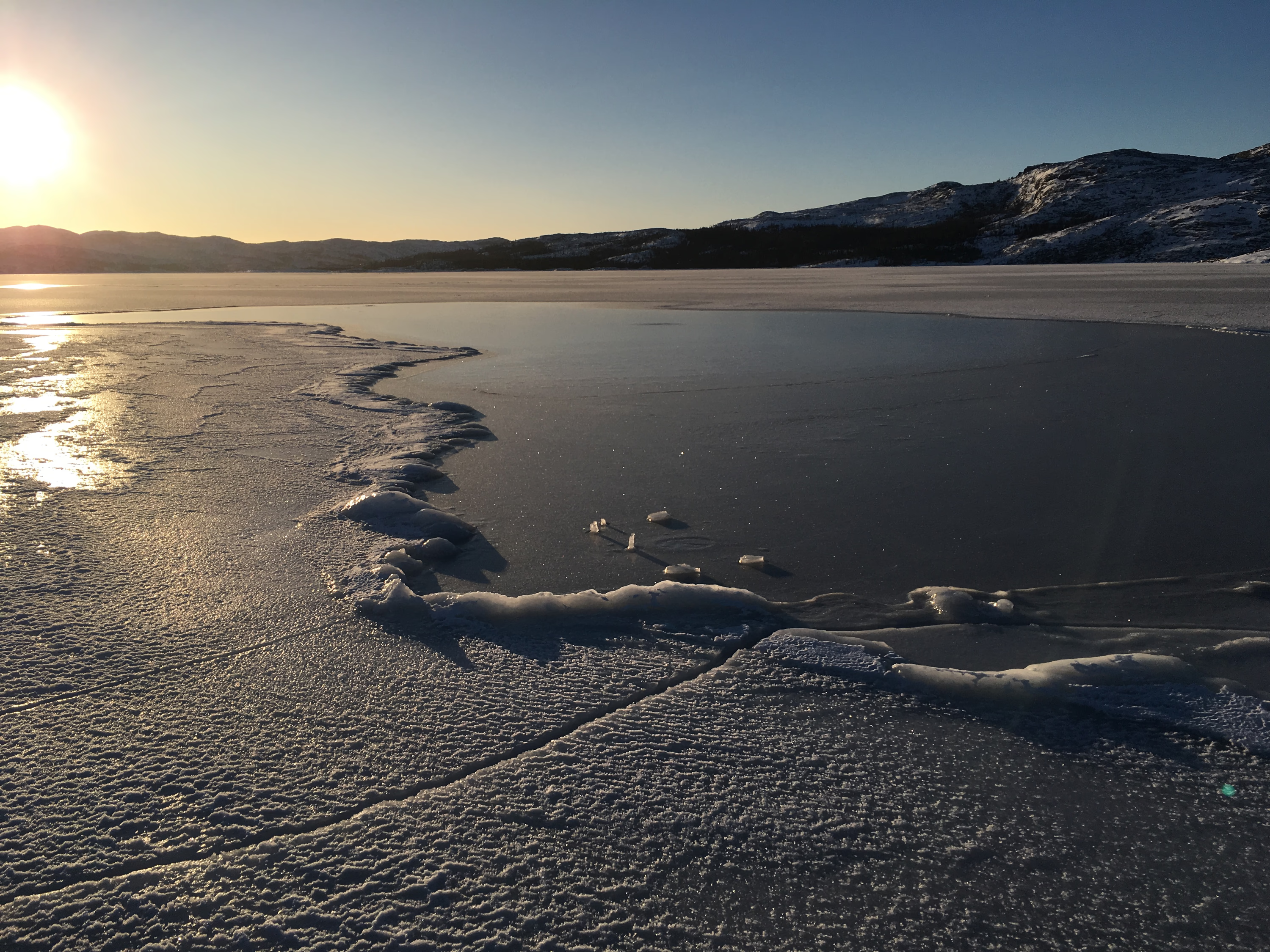
To offer the observers some structure, the second principle emphasized sea ice observations, as the name of the program suggests, but those turned out to not be the only observations. “About half of the observations aren’t about sea ice,” said Oliver, “but this highlights the connectivity of sea ice to everything else.” Travel safety, food security, and animal migration are all woven into sea ice. As such, observations are only made during the sea ice season: December through June. Community observers move across land and water not only as data collectors, but as knowledge keepers who watch the shifts in ice, the movements of wildlife, and signs of a changing climate.
Going back to Webb’s observation, for instance, it emphasizes that the lack of core ice in rivers had implications beyond travel safety. For core ice to form, there needs to be enough flow in the river. Snowmelt feeds the river that freezes progressively downward, sealing the surface, while low temperatures freeze the gravel bed. With both the top and bottom gradually freezing, the flow gets constricted, increasing pressure until a breaking point when water gushes over top of the river to refreeze into another layer. Webb’s observation implies that the lack of core ice is linked to decreased snowfall and rising temperatures, both surface and the water itself. “What is supposed to be a thick frozen river, down to parts of the base, is not happening, particularly in the late spring,” Harrison said. Core ice used to remain intact well into summer. Now, Webb was concerned that the lack of core ice meant less river flow at the end of summer. This observation of a physical phenomenon could also be supported with instrumental monitoring, such as tracking snowfall; air, river, and soil temperature increases; river flow depth and speed; and changes in type of precipitation shifting from snow to rain. Yet Webb reached this understanding with his observational skills alone.
Seeing beyond the ice
Harrison emphasizes that making these observations is the first step, understanding them is the real challenge, not just for her as an intermediary who garners the observations into the database, but also as to the observations turn into policy, potential environmental protection, and action with Inuit self-determination at the center. Oliver acknowledges because it is a university-based project, housed administratively at Dalhousie University in Nova Scotia, most of the decision making lands on him as the project’s lead. “That is a challenging place to be when you’re trying to run a program that you want the decision to be reflective of consensus amongst a broad group,” Oliver said, “including many people that are in the community and outside of the university.” That is why the team organizes annual meetings, bringing the observers and project leads together for multiple days to discuss the program and prioritize the program’s focus. “The real breakthrough for me was our first annual meeting,” Harrison said. “The guys from the different communities didn’t know each other before it. So, seeing us all together, connecting to each other instead of being siloed in different parts of the project. There was just a found sense of purpose as a group. Nothing else could have created that.” Though Harrison has now left the project to move on to other endeavors, the database is ready to be publicly released in summer 2026.
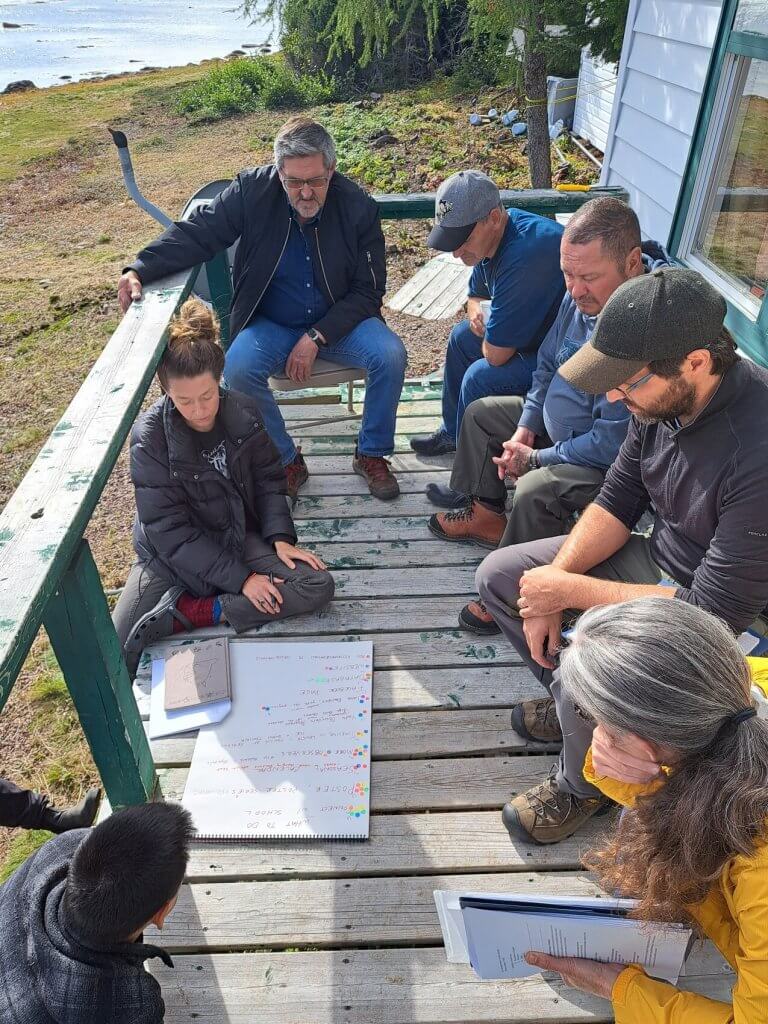
On the other end of the interface, community members can search the observations based on three basic criteria: the time, location, or observer. Users can scroll through the results, mimicking popular social media websites. Eventually, glossary terms will be added to help preserve and explain Inuttitut terms. Researchers outside of the community can also access the database after accepting the terms set by Nunatsiavut Government, enforcing Indigenous data sovereignty. Oliver understands that the observations are different from how a scientific measurement campaign would operate, but there is overlap. “It fits with scientific ways of understanding and highlights a way of understanding how the system is changing,” Oliver said. That overlap is significant.
As the Arctic warms up to four times the global average, understanding the complexity of the changes and their rippling consequences will be essential for planning a different future. Fostering meaningful collaborative research requires bridging Inuit knowledge with Western science and ensuring that the observation goes beyond a data point, incorporating the environment as a malleable, reactive system, where one variable interacts with a string of factors. For this reason, NSIOP has elevated Inuit voices into policy changing positions, making connections between communities, not just in Nunatsiavut, but globally with their database.