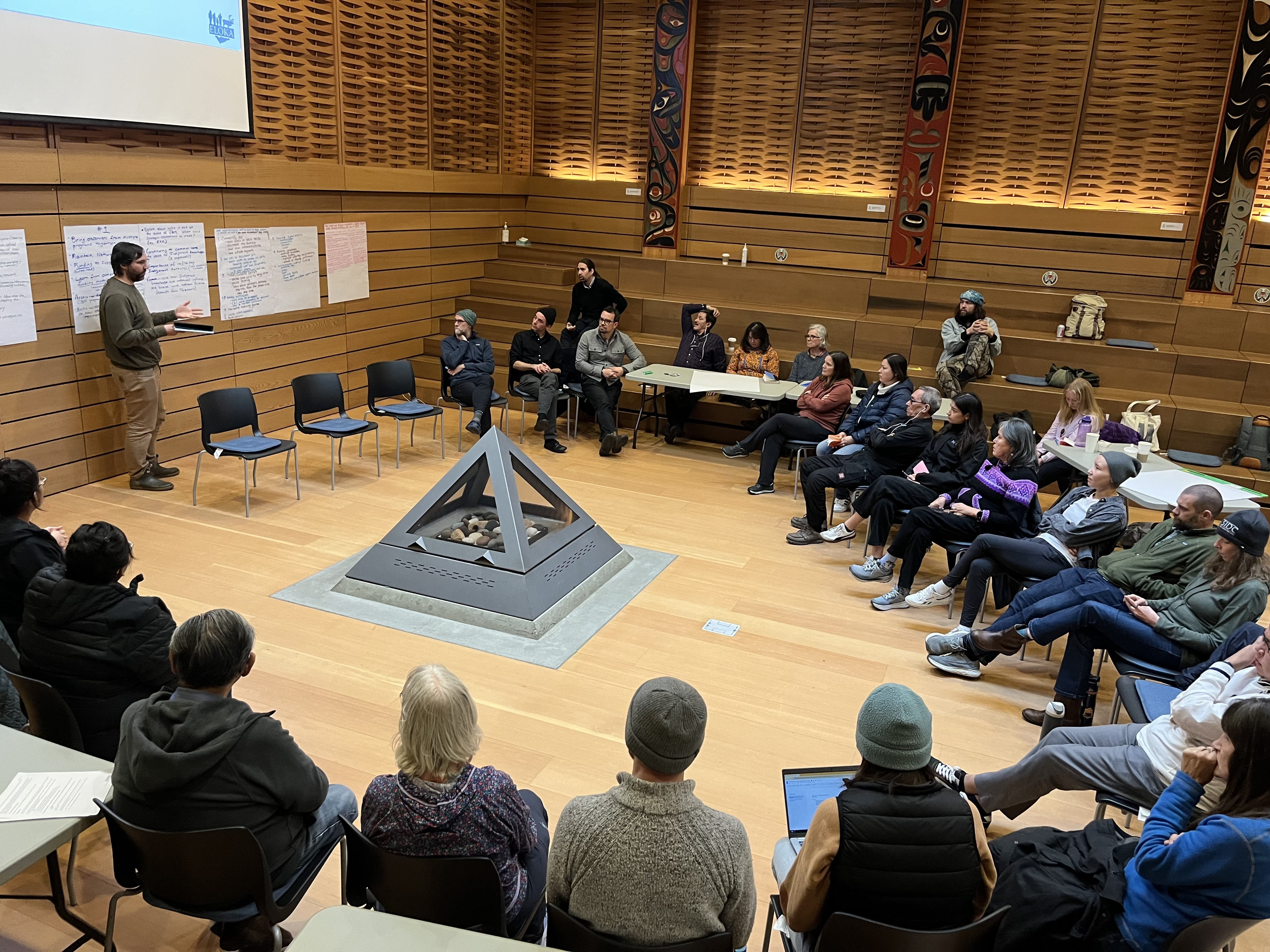
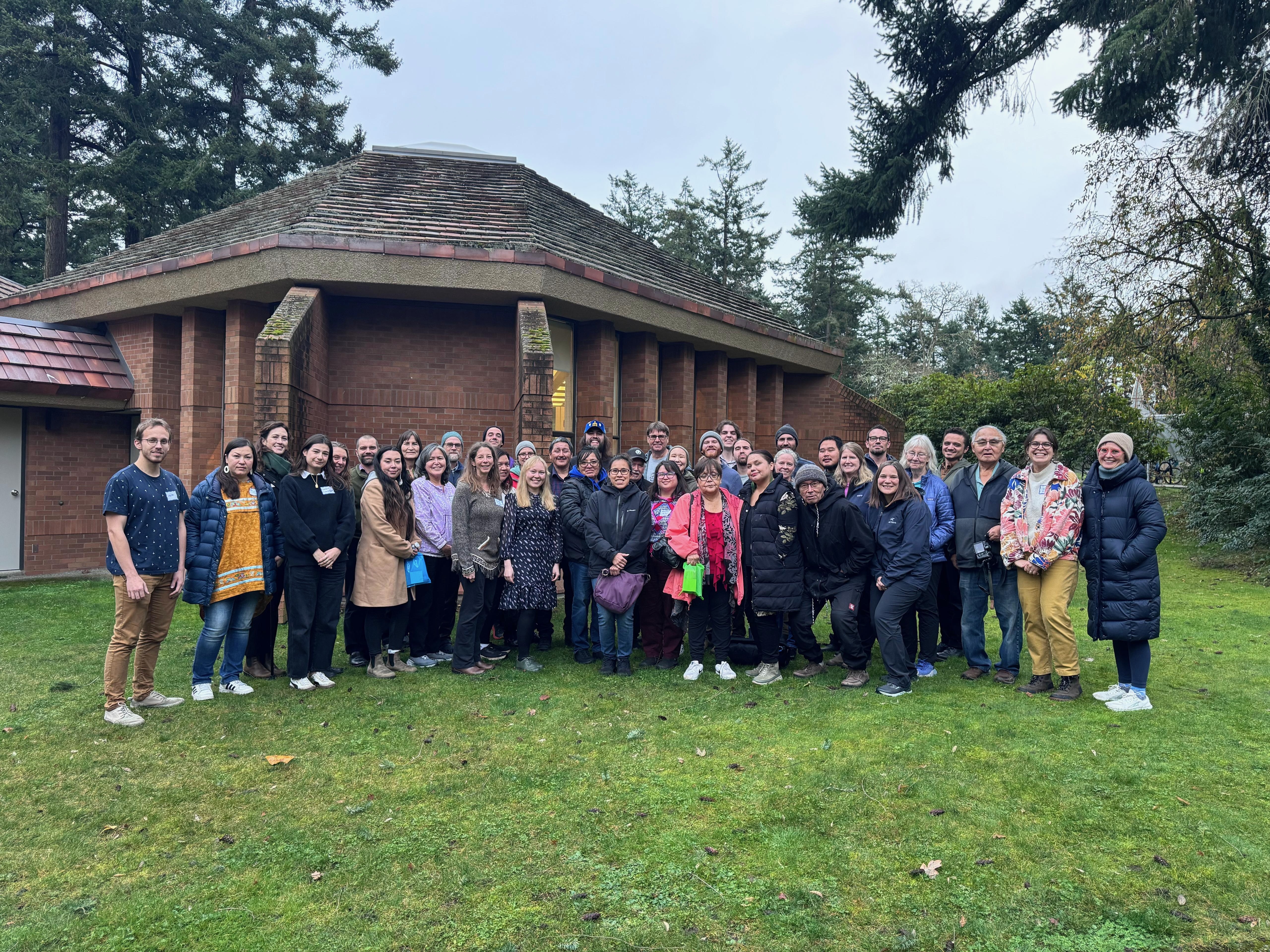
From November 13 to 15, 2025, ELOKA brought 40 individuals from our partner organizations to Victoria, British Columbia, Canada. Partners traveled from Alaska, Canada, Greenland, and Finland to spend three days learning and sharing. Tatiana Degai, Professor of Anthropology at the University of Victoria (UVic) graciously hosted us and organized cultural events to celebrate local W̱SÁNEĆ and lək̓ʷəŋən cultures with support from UVic graduate student Liam Campbell.
Day one: Story and song open the meeting
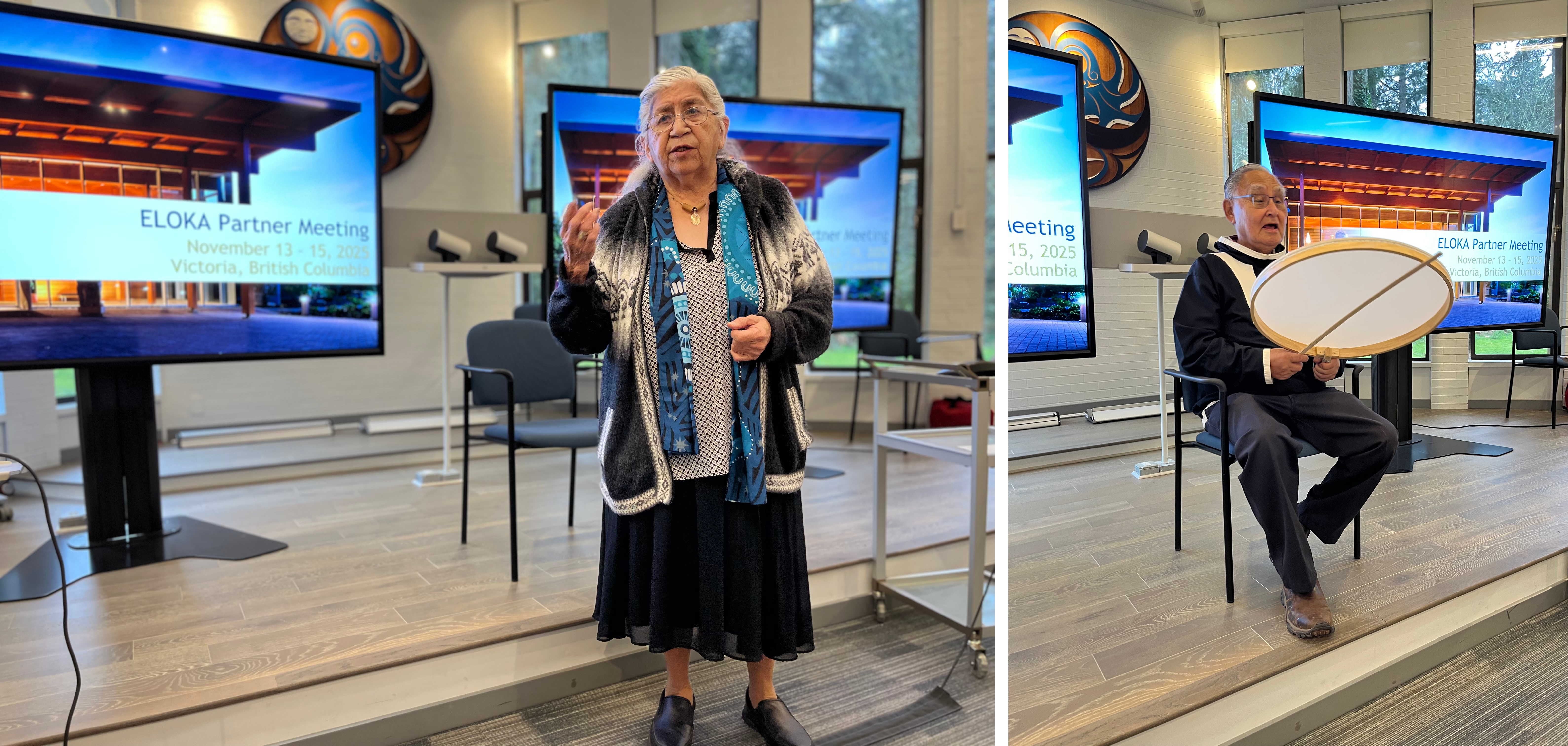
On the first day, two Elders-in-residence at UVic opened the meeting: Elder May Sam from the Malahat Nation, opened with a story to ground us in place, and Elder Wilburt Papik, Inuit from Inuvik, played a song on the drum. Hearing stories and songs from Elders centered and grounded everyone in attendance and helped us begin our work together with intention in a good way and we spent the rest of the morning with introductions and ice breakers.
Observers and project leads from the Arctic Alaska Observatory and Knowledge Hub (AAOKH), Sea Ice for Walrus Outlook (based in Alaska), PISUNA (based in Greenland), and the Nunatsiavut Sea Ice Observer Program held a panel discussion. Panelists shared that the ocean is taking longer to freeze over. Across these Arctic programs, there is an urgency to document local observations of change to share with their communities, youth, and future generations. The first day wrapped up with the viewing of a short film about ELOKA and with Ann Riordan remarking on the passing of Yup’ik Elder Mark John and all of his contributions to his community and ELOKA.
At the close of the meeting, we had a gift exchange dice game in which participants presented small gifts such as crafts or food items from their homelands and then participants competed with each other to select their preferred gift. Playing games and having fun together is an important way of building and deepening relationships at ELOKA gatherings. We ended our day with a visit to the Taqsiqtuut Indigenous Research-Creation Lab, which hosted an evening reception and presented Indigenous students’ artwork and a virtual reality exhibit informed by Indigenous art and design.
Day two: A night of culture and sharing
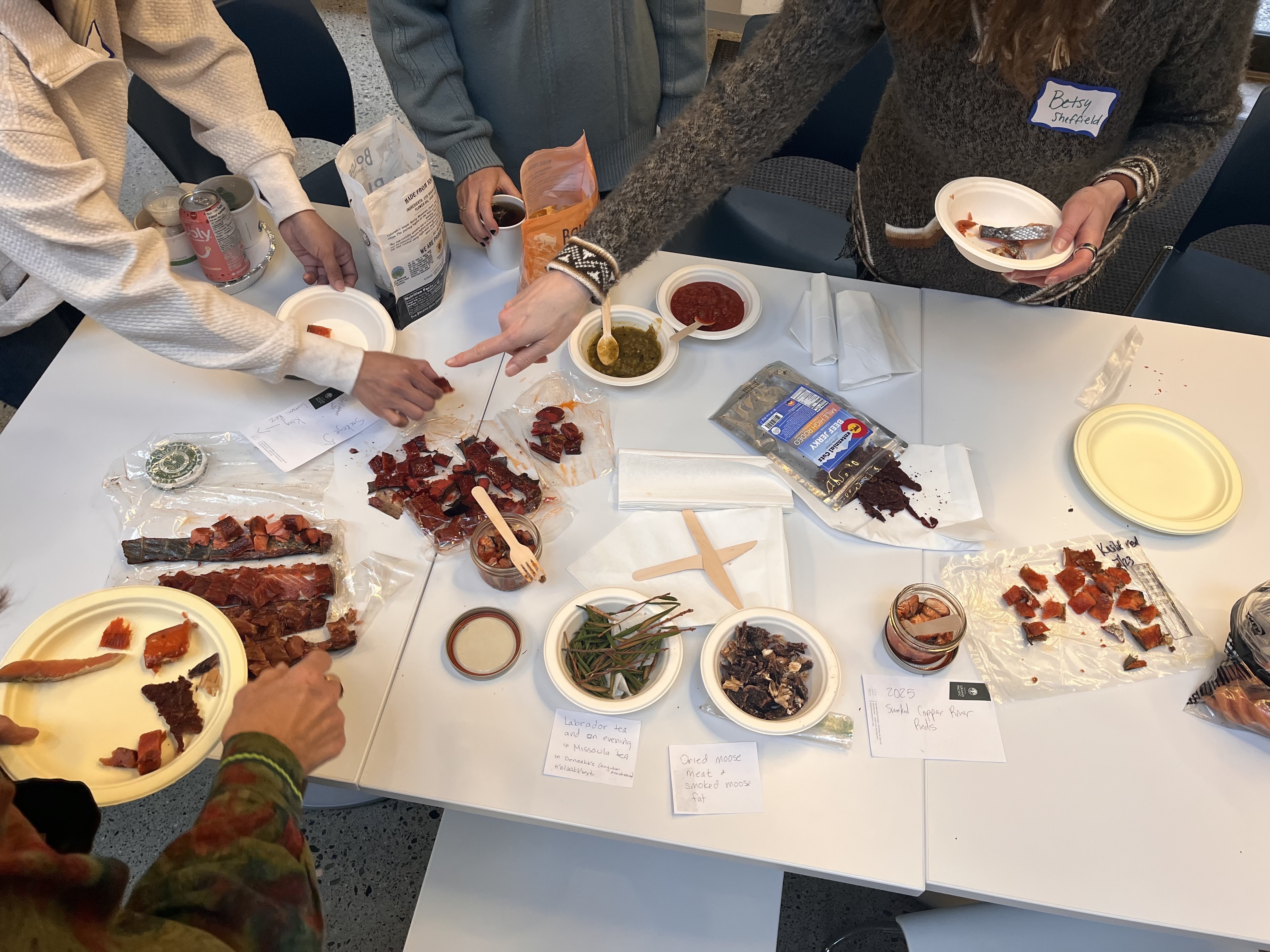
On the second day, partners joined a panel on “Taking action to support community goals and climate resilience.” Partners discussed how they center youth in their unique approaches to climate resilience and adaptation. Over lunch, we hosted a food exchange, sharing smoked salmon, dried moose meat and fat, tea, and other local and traditional foods from Alaska and Canada. After lunch, five teachers from the W̱SÁNEĆ Immersion Language school discussed their various methods to revitalize their language and keep it alive for generations. Following their presentation, partners held a panel on language revitalization and their work with place name atlases. Different approaches were discussed. Jake Swenson from the Eyak Atlas group shared that his uncle used sticky notes all over his house to help learn vocabulary. Tatiana Degai shared how playing “go fish” engages her children to help learn the Itelmen language. We closed the meeting with another dice game and gift exchange, and then walked across campus to the First Peoples House for our Culture Night.
Our Culture Night was held at the First Peoples House at the University of Victoria. Jessica Sault and her team catered the event and Mique'l and Mike Dangeli, leads of the Git Hayetsk Dancers group, facilitated it. The feast included sockeye salmon filets, herring eggs, seafood chowder, crab, frybread, and wild rice. Jessica’s team then danced the bear dance with both a black bear and a polar bear. Lək̓ʷəŋən Traditional Dancers followed with several dances. After dinner, partners shared dances, songs, and stories during the “open mic.” The second day culminated in gratitude for the deep feeling of togetherness and exchange.
Day three: Reconnecting through art and conversation
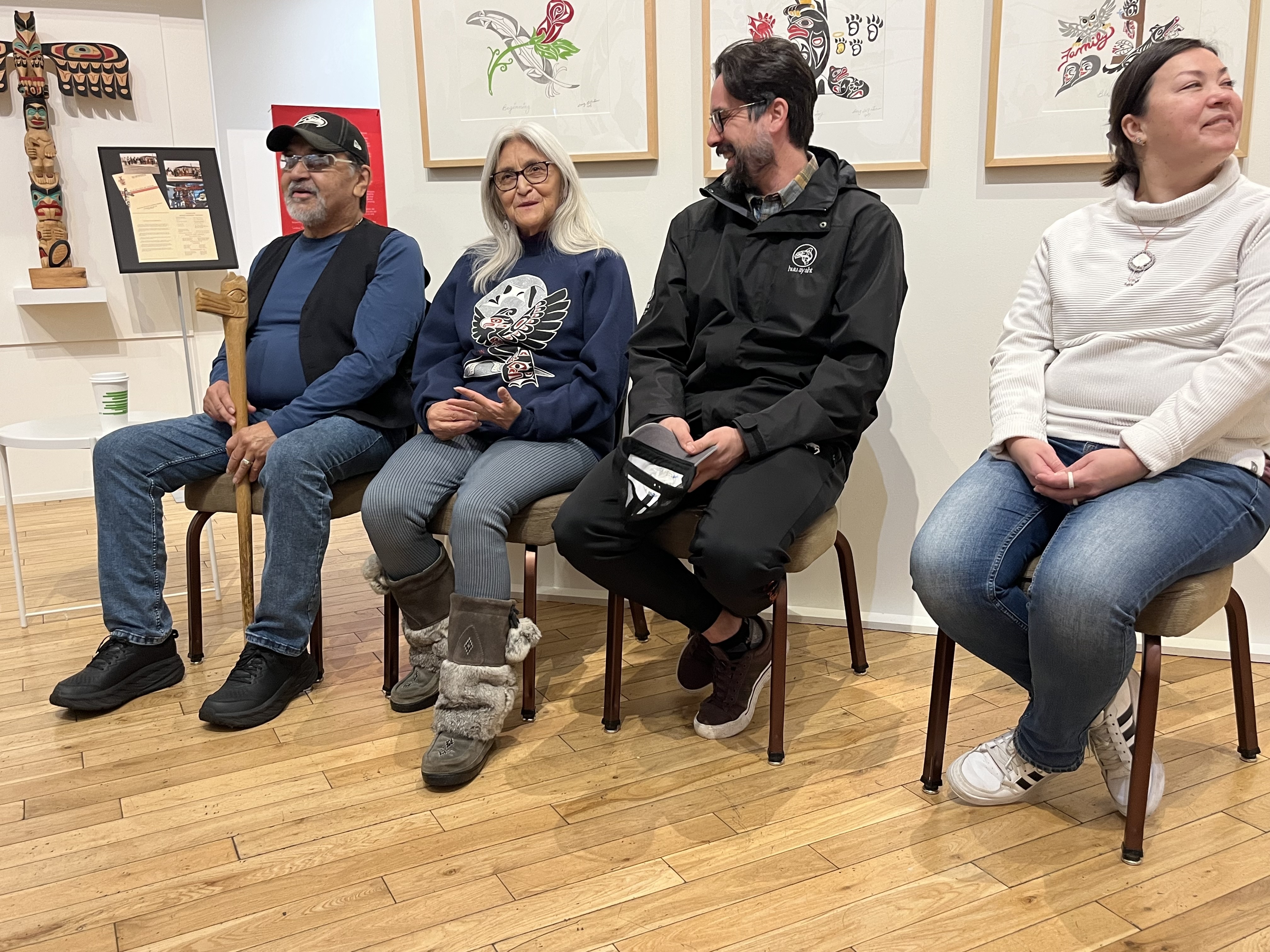
On our final day together, we started the morning a little differently. We walked to the Legacy Gallery, where Doug LaFortune, Kathy Horne, and Tommy Happynook spoke about the inspirations behind their art. Doug Lafortune and Kathy Horne, both Coast Salish Elders, told the story of Doug’s journey as an artist. Since 1973, Doug has been working as a Salish artist in several mediums, including carving, drawing, painting, and serigraphy. Doug often shares his craft by teaching the younger generation at schools and special events, and frequently collaborates on art projects with his wife Kathy. Tommy Happynook, čaačaaciiʔasatḥ from the Huu-ay-aht First Nations, is a professor of anthropology at the University of Victoria, and his exhibit, nunuukwin (we sing): (re)connecting to the natural and spiritual worlds through song is based on his personal connections to his homelands and ancestors. It looks at nuucaanul songs as a way of creating and sharing knowledge and teachings, both between people and the natural and spiritual worlds.
We closed out the meeting at the First Peoples House, where we reflected on our priorities for ELOKA’s future. It was a meaningful space to reflect on the past few days, and we ended the meeting feeling grateful for the ELOKA community and hopeful about what comes next.
Overall, the ELOKA meeting fostered a strong sense of togetherness. After three days of sharing stories, perspectives, and experiences, we left feeling connected and energized. Following the meeting, the ELOKA team intends to write a collaborative statement based on our knowledge exchange during the meeting.