By Natasha "Tash" Haycock-Chavez
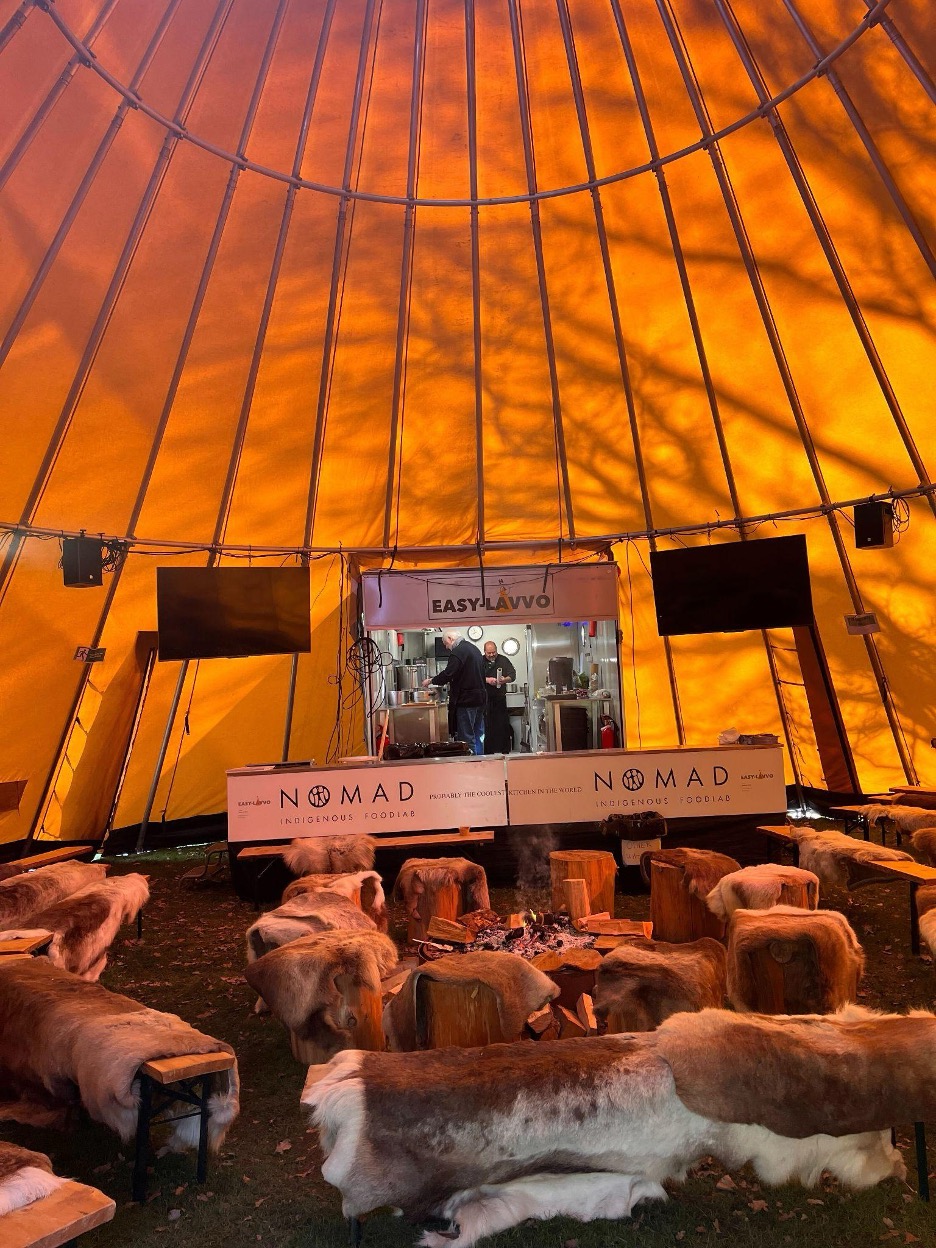
The smell of smoke is enveloping, pulling my attention away from the biting cold sneaking through the opening of the Lavvu—a large teepee-style tent traditional to the Saami. Inside, reindeer hide drape over benches that encircle a fire pit. The Indigenous Pavilion, as the space is called, feels more akin to sitting around a campfire with friends than attending a science conference.
I'm here for Arctic Science Summit Week (ASSW) on behalf of the Exchange for Local Observations and Knowledge of the Arctic (ELOKA), to share ELOKA’s approach to Indigenous data sovereignty and community-led monitoring in the Arctic, and to learn from programs with similar goals. Each year, a member country of the International Arctic Science Committee (IASC) takes a turn hosting, and this year Denmark hosted ASSW at Aarhus University in the colorful and quaint town of Aarhus. This year, the Arctic Observing Summit (AOS) is hosted in conjunction, adding a focus of cross-cutting themes related to Arctic observing and monitoring.
The Indigenous Pavilion first became part of ASSW in 2025 in Boulder, Colorado, and has rapidly emerged as a priority for the conference by Arctic Indigenous rights holders and non-Arctic Indigenous researchers alike. The Indigenous Pavilion offers a space for participants to share about Arctic Indigenous Knowledges and cultural practices, and has quickly become my favorite space—a welcome reprieve from full days of conferencing.
For the past five years, ELOKA has attended ASSW and contributed to discussions surrounding Indigenous leadership in Arctic research, Indigenous data sovereignty, and community-led Arctic observing. This year, I convened two sessions: "Indigenous Data in Community-Led Arctic Observing" and "Strengthening Arctic Observing Through Indigenous-Led and Community-Based Monitoring Initiatives."
Our first session, "Indigenous Data in Community-Led Arctic Observing," was hosted in the Indigenous Pavilion and focused on research that centers Indigenous data. We heard from Kia Krarup Hansen, a researcher from Denmark, on Saami practices of smoking reindeer meat and how Traditional Knowledge informs these methods. I shared about the Guardians Data Roundtable Meeting that ELOKA helped host in Yellowknife, Northwest Territories, Canada, in 2024, along with the report that emerged from it. Peter Pulsifer, associate director at the Geomatics and Cartographic Research Centre at Carleton University, then presented a data management selection tool developed in response to the roundtable's findings. The idea for a data management selection tool emerged during the roundtable meeting. Leads from Indigenous Guardian and land-stewardship programs shared that they need a streamlined approach to data management that can directly support use of their data for decision making. After sharing the preliminary version of the tool, it became clear from the audience that this tool could be helpful for the broader Arctic research community, and we are excited to share more information about it through its development.
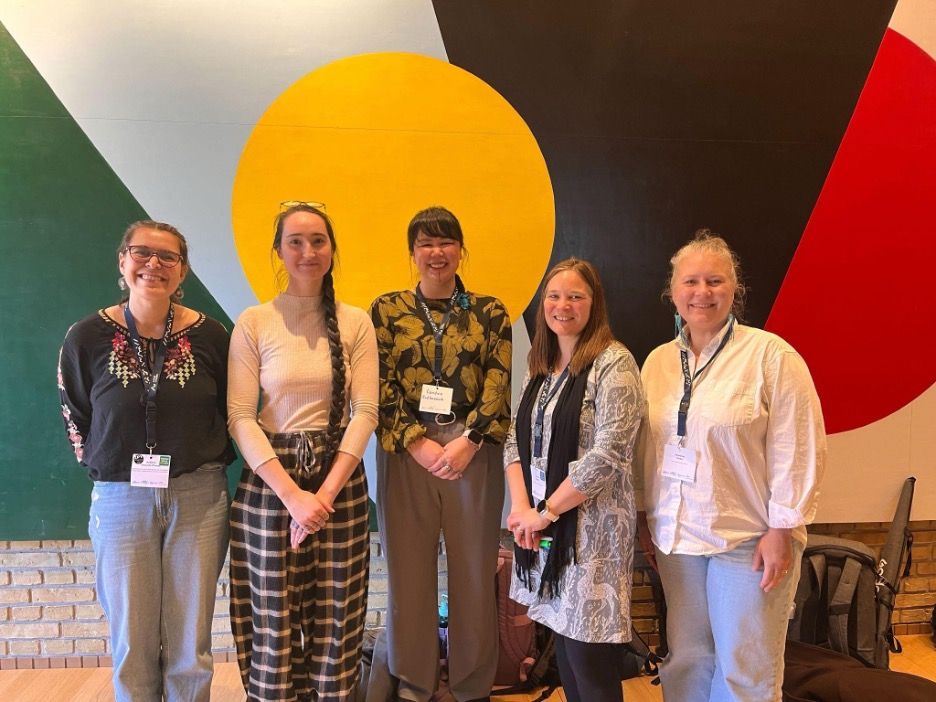
Our second session, "Strengthening Arctic Observing Through Indigenous-Led and Community-Based Monitoring Initiatives," was co-convened with Victoria Qutuuq Buschmann (Inuit Circumpolar Council Greenland), Rowenna Gryba (Inuit Circumpolar Council Canada Canada), Candice Sudlovenick (SIKU), and Donna Hauser (Arctic Alaska Observatory and Knowledge Hub). The first hour was dedicated to sharing examples of Indigenous-led programs from across the Arctic grounded in principles of Indigenous data sovereignty. With over 50 attendees filling the room, the second half shifted to small group discussions organized around three themes: barriers and enablers, Indigenous data sovereignty, and data use and decision-making. Each group spent 30 minutes in discussion before sharing a key takeaway with the room.
The group on barriers and enablers highlighted the value of individuals who can make things better—creative, flexible navigators who find ways forward. The data sovereignty group noted that while the theory of Indigenous data sovereignty is relatively straightforward to understand, putting it into practice is far more complex. The third group explored the diverse ways of sharing observations and knowledge, and how these directly shape how information is ultimately used. Overall, the session successfully built on a similar conversation ELOKA co-convened at AOS two years ago in Edinburgh, continuing to advance how we support Indigenous-led observing across the Arctic and foster coordination among groups doing parallel work.
On the final day, during the closing ceremony, it was announced that ELOKA's Matt Druckenmiller has been elected as the new president of the International Arctic Science Committee (IASC). IASC not only organizes ASSW each year but also shapes the direction of Arctic science on a global scale. It is truly inspiring to see Matt step into this role and we are excited to see someone who has dedicated his science career to supporting Indigenous-led and collaborative research be the president of IASC. Congratulations to Matt!
After eight days of connecting with researchers, academics, and Arctic Indigenous rights holders, my heart and head felt full and inspired. My clothes were smoky from daily visits to the Lavvu—but more than that lingering aroma, I knew I was bringing something much more meaningful back home: hope and motivation to continue supporting Indigenous-led research to help make Arctic research more equitable and meaningful.